
Meeting on the Proposed Regional Research Centre for PIO Studies

PIO History & Heritage Exhibition 2025
July 11, 2025
Siddha and Ayurveda Conference 2025
July 12, 2025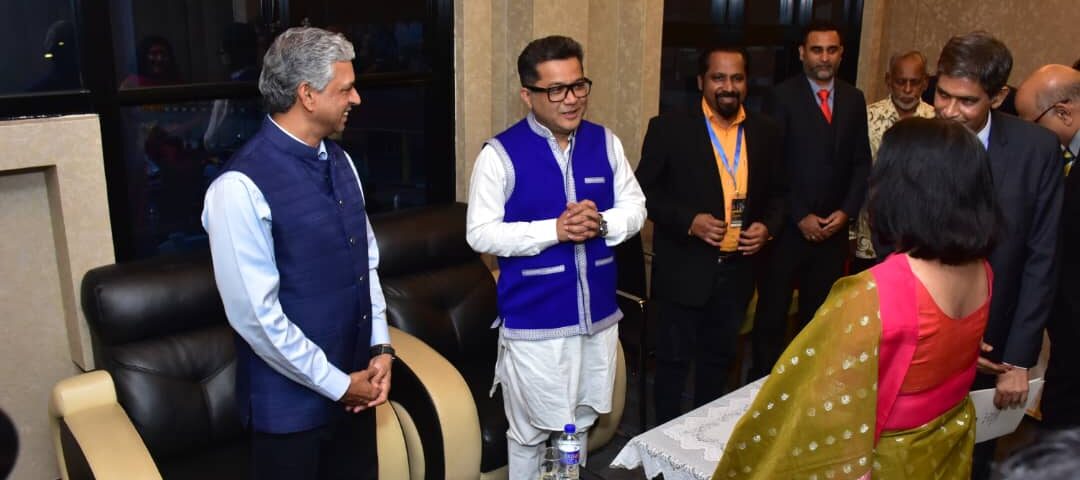
Closed-Door Meeting on the Proposed Regional Research Centre for PIO Studies
On 11 July 2025, the Global Organisation of People of Indian Origin (GOPIO) Malaysia convened a closed-door meeting to discuss the establishment of a Regional Research Centre / Chair for PIO Studies in Southeast Asia, to be based in Malaysia. The meeting was held at the VVIP Waiting Room of the International Youth Centre.
The session was led by GOPIO Malaysia Vice President, Sashidharan Santhesegaran, and brought together 20 participants, including senior policymakers, academics, and representatives from the diaspora community.
High-Level Dialogue on PIO Research and Scholarship
The meeting was attended by several distinguished guests and stakeholders, including:
- Shri Pabitra Margherita, Hounourable Minister of State for External Affairs, Government of India
- YB Saraswathy Kandasami, Deputy Minister in the Ministry of National Unity, Malaysia
- Shri Ankan Banerjee, Joint Secretary, Ministry of External Affairs of India
- His Excellency B.N. Reddy, High Commissioner of India to Malaysia
- Professor Dr Ravichandran Moorthy, Advisor to the GOPIO Malaysia Academic Committee
- Senior members of GOPIO Malaysia and academic participants also contributed to the discussion, which focused on advancing research initiatives relating to Persons of Indian Origin (PIO) communities in Southeast Asia.
Importance of a Regional Research Centre
The proposed Regional Research Centre for PIO Studies aims to provide an institutional platform for scholarly research, documentation, and academic collaboration on diaspora communities in Southeast Asia.
Such a centre would support interdisciplinary research on topics including migration history, cultural identity, economic participation, and socio-political development of PIO communities, while also facilitating partnerships between universities, researchers, and policy institutions.
The initiative reflects a broader effort to ensure that the historical experiences and contemporary contributions of PIO communities are systematically studied and documented within the academic landscape of the region.
Impact and Future Direction
The meeting generated positive interest and preliminary support for the establishment of the Regional Research Centre, with participants recognising the importance of a structured platform dedicated to diaspora research.
As a follow-up, GOPIO Malaysia plans to submit a detailed proposal to the Ministry of External Affairs of India, outlining the budget, operational framework, and implementation strategy for the proposed centre.
The high-level dialogue highlighted GOPIO Malaysia’s growing role in promoting academic research and international collaboration on PIO studies, while also reinforcing its engagement with policymakers, scholars, and diaspora organisations in advancing structured research initiatives on the global PIO community.


